September 18-21, I spent in Nashville with daughter Ellen, at a gut biome conference. Having organized about 30 conferences in my life, it was fun to just attend and learn I was the only organic farmer there, as the rest of the folks were doctors and health professionals. And I tried to keep my mouth shut most of the time.
I have had great respect for Kiran Krishnan, the co-founder of Microbiome Labs, since I first met him probably 15 years ago, and was not let down when I heard him speak about a new product of his called Cartigenix (https://calroy.com/product/cartigenix-hp/). He has dedicated his life to researching the gut biome and developing products to help folks improve theirs. He also is a consistent presenter on YouTube, at conferences, and now through special courses for lay people and for practitioners. Kiran feels that terrain is the most valid approach to dysbiosis, not using killing protocols, but instead supporting the healthy functioning of the gut. This is exactly how I feel about farming, that we mustn’t kill things, but instead support the natural defenses of the plants and animals and build strong immune systems.
An exciting takeaway was a course by a Dr. Turnpaugh on Lyme Disease and a follow-up conversation with him about protocols. As 3 of our farm staff contracted Lyme this summer (me one of them), this topic is dear to my heart. He has promised a thorough write up on non-doxycycline natural support to avoid it in the first place and then treatment options that are non-drug. When I get that, I will publish it here.
Not only was it a blast to be away for four days, but everything at home and on the farm ran like clockwork. Thanks for all who made that possible, and notably Jack and Drew.
Gratitude this week
With Matt still out, many of us are filling in for him. Jack and I did the Worcester deliveries in a borrowed van (our Toyota is still in the shop). By the time we got to Worcester it had no power steering fluid, and I was helping Jack turn corners (yes, it was scary). We pulled into a vehicle repair shop and asked for help. A couple of the staff dropped what they were doing, found the leak in the hose and re-clamped it, filled us up with more fluid and sent us on our way. Jack had to force $25 on them and I gave them a half dozen eggs out of the back of the van. We both drove away with an extreme sense of gratitude to these two folks who got us out of a fix, and with such graciousness!
2025 MHOF CSA
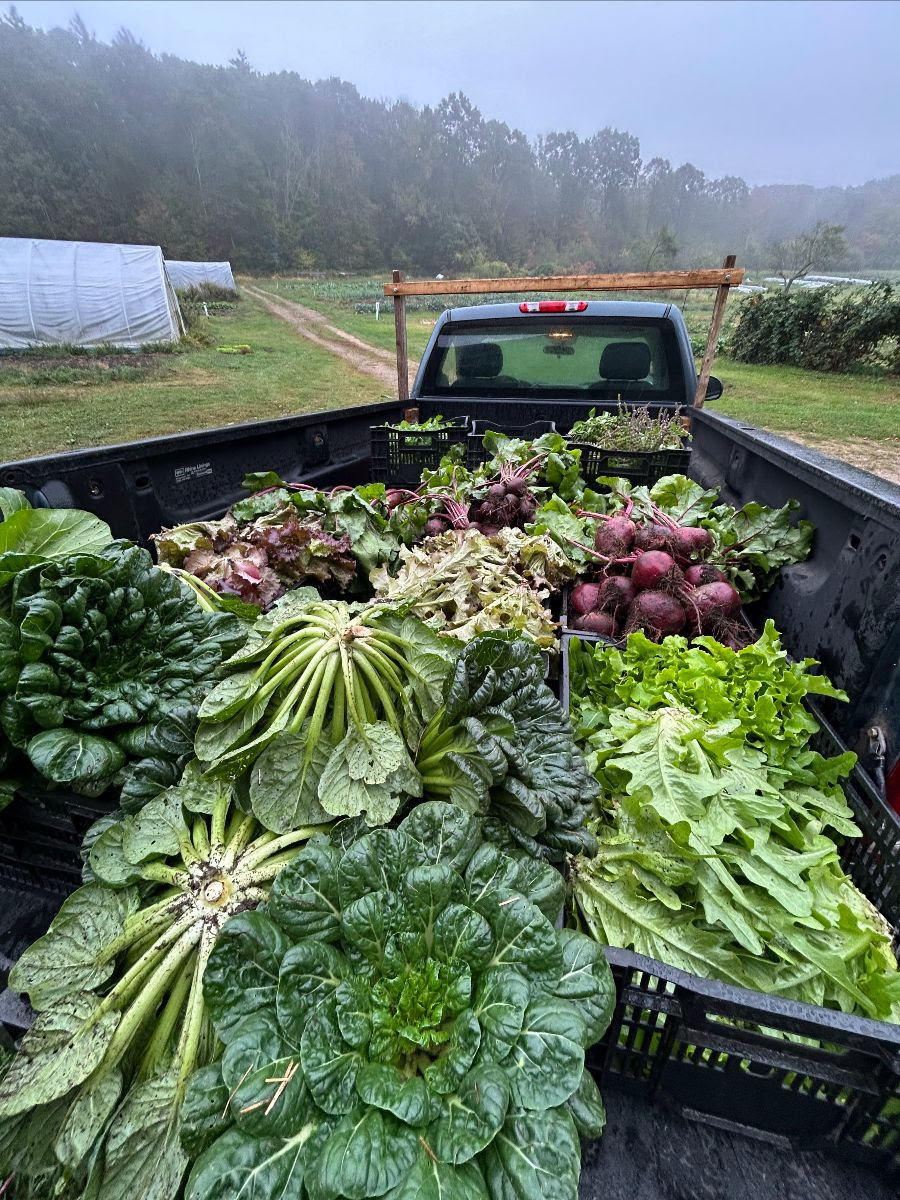
Picking last week on Wednesday was fun in the misty rain

Lettuce
Cilantro
parsley
Monster beets again – when we pick these, we get giddy! We are working on getting them deeper into your share bags so that the leaves don’t get trashed in transit to your delivery site

Broccoli/cabbage/cauliflower or Asian greens

This is tatsoi, similar to spinach

This is bok choi or pac choi
Arugula

Collards – one of the best sources of folate, and my, aren’t they beautiful!

Summer squash- probably only for larges and mediums
Chard
Tomatoes

Radishes
Turnip greens
Tulsi
Summer savory
sage
sweet potatoes
flowers for flower shares – this might be the last week
SIGN UP FOR A FALL SHARE NOW
Look forward to broccoli, lettuce, Asian greens, beets, potatoes, onions, leeks, garlic, winter squash, celery and celeriac, parsley, kale, collards, hopefully chard, spinach, cabbage and who knows what else.

Watch on Facebook
Watch on Instagram
Glyphosate Struggle Deepens
Jack Kittredge
The battle between Bayer, the corporation making and marketing 280 million pounds of Roundup annually in the US (and 5 times as much worldwide) to farmers and homeowners wanting to kill weeds and grass, and scientists and doctors deeply concerned about the pesticide’s toxic effect on human health, is getting sharper.
Bayer has threatened Congress that it will drop the product if it is not protected from lawsuits filed by customers harmed as a result of using the herbicide. The company maintains glyphosate, the active ingredient, is harmless despite a 2015 finding by the World Health Organization that it is a probable human carcinogen. Since then more studies have confirmed its harmful effects, including a June 2025 study published in Environmental Health which found “solid and independent scientific evidence of the carcinogenicity of glyphosate and glyphosate-based herbicides.”
Tens of thousands of people have brought suit alleging that exposure to Roundup has caused them to develop non-Hodgkin lymphoma, and Bayer has already paid out billions of dollars in settlements and jury awards. In addition, evidence is mounting that glyphosate is associated with neurotoxic effects at doses lower than those previously considered safe by regulatory agencies, and is involved in liver and metabolic problems, including reproductive and endocrine-system effects. The compound is so widely used that a CDC study in 2022 found it in the urine of 80% of American adults and children. A French study found that 55% of sperm samples from an infertility clinic contained high levels of the compound.
Bayer acquired Roundup when it bought Monsanto in a 2018 acquisition for $63 billion, a deal described as “the most disastrous merger in history”. The glyphosate controversy is perhaps the starkest example of what has become a recurring conflict in American life – that between corporate power and profits on the one hand, and environmental and human health on the other. Proponents of each claim to have science on their side and are struggling to discredit their opponent. Bayer has been pushing for legislation to absolve it of liability for damages (such as currently exists for nuclear power and vaccine injuries) but so far the US Congress has not gone along. Two states however, North Dakota and Georgia, have passed such state-level exemptions and similar bills are pending in five others.
You can be sure there will be more to follow in this epochal tale!
7 DAY METABOLIC CLEANSE AND RESET with ELLEN
https://ellenkittredge.com/metabolic-reset.php

Visitors this week
James was a Stetson volunteer from 2013-2017. He stopped in on Thursday to chat with me and Jack, help with the tomato processing and the afternoon chores. It was so sweet to spend an hour or so with him and think back on life on the farm 12 years ago, hear about how much he loved the lunches, the peanut butter balls, Clare, the hard work, and the sense of calm that he felt whenever he came to volunteer on a Monday.
Holly is volunteer John’s friend who came with him on Saturday this week. While Justin and John did the outside stuff, we processed food together and discussed life. What a nice morning!

Jennifer’s Recipe
This recipe sure was with many thanks to Dan Kittredge (and his tomatoes, eggplant and peppers). I canned 16 quarts of sauce, I froze 10 quarts as I ran out of jars, and I have about 12 1-gallon bags of frozen whole tomatoes to make sauce later in the winter. I am beyond grateful.
Roasted Eggplant & Tomato Sauce with Quinoa Pasta
From an Ayurvedic perspective, slow roasting enhances the natural sweetness of tomatoes and peppers and tempers their acidity, making them easier to digest. The combination of earthy cumin, warming garlic, and aromatic basil stimulates digestive fire while grounding Vata and supporting Kapha. The moist, oily texture of the sauce helps counter the dryness of autumn and keeps the dish gentle enough for Pitta when served warm rather than spicy.
Western nutrition highlights the antioxidant power of tomatoes (rich in lycopene), vitamin C from peppers, fiber and phytonutrients from eggplant, and complete protein from quinoa. Cumin adds carminative properties that support gut health and reduce bloating, while garlic contributes immune-boosting allicin. Together, these ingredients create a heart-healthy, anti-inflammatory meal that supports digestion, immunity, and overall vitality.

Farm Doins
Although we were promised lots of rain this week, I hedged my bets and kept the whirly gig going until it started on Wednesday. The vegetables, particularly on Friday, were so very happy, though a light frost on Monday night caught the sweet potatoes and some of our new planting of summer squash and green beans.
It was an amazing week on the farm because, not only was the weather perfect for working (luckily, we take off of field work on Thursday, when it rained all day), but the rain was long and soaking when it came. The drought seems to be over, or perhaps abated. All week I ran from one crop to the next saying, “Oh my gosh, this is just beautiful” (possibly ad nauseum for the rest of the farm staff).
So much of Monday, Wednesday and Friday were spent picking and packing the CSA, but Danny and Stu did get the damaged hoophouse pole removed and Jack and Danny delivered it to a local craftsman to get fixed. Jim kept up with our third cutting of hay, and the rest of us got some radishes planted – our last outside planting for the year. From Wednesday on every spare moment went to processing tomatoes for juice. Two more trays of lettuce were started for planting into boxes in the greenhouse for winter.
Tuesday was a day of accomplishment, as it almost always is, because there is no CSA to pack. We moved our young replacement layers out of the chicken house to pasture houses in the field. Here Skippy surveys her new charges.

Then, after Justin expertly raked the hay that Jim cut on Monday, we picked up almost all of it, but ran out of time before Wednesday’s rain. This hay goes to the hay barn for chicken bedding for the winter.

We also pulled our dahlia trellis and weeded and mulched some cabbage and cauliflower.
In the afternoon, Justin and Marissa and I went on a farm field trip to Dan’s house (he has been away speaking) and scored 6 more crates of tomatoes for juice. So far I have 63 quarts on the shelves!

Saturday, we made sauerkraut, butter from Misty Brook cream, started the seed-saving process on tomatoes for next year, and trimmed the encroaching sumac on the hill behind the sheds.
Julie
The bees love the tulsi

Leave a Reply
You must be logged in to post a comment.